Water damage restoration starts with inspecting the property and stopping the source of the water. Restoration professionals then remove standing water, remove damaged materials when needed, dry and dehumidify the structure, clean and sanitize affected areas, monitor moisture levels, and repair the property. The exact process depends on the extent and type of water damage.
Not every water loss requires every step. A small leak from a clean plumbing line may require extraction and drying with few repairs. Widespread flooding or sewage contamination may require material removal, more extensive cleaning, and reconstruction.
Quick Takeaways
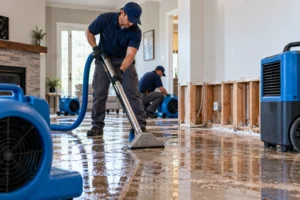 The first step is finding the water source and assessing the damage.
- Standing water is removed with professional extraction equipment.
- Materials that cannot be safely dried or restored may need to be removed.
- Air movers and dehumidifiers help dry wet building materials.
- Moisture meters help restoration professionals track the drying process.
- Contaminated areas may require additional cleaning and sanitizing.
- Repairs begin after affected materials reach appropriate drying goals.
- Water damage restoration can take several days to weeks, depending on the extent of the damage.
What Is the Water Damage Restoration Process?
The water damage restoration process typically follows this sequence: inspection → water extraction → material removal → structural drying → moisture monitoring → cleaning and sanitizing → repairs and reconstruction. The exact steps depend on the water source, affected materials, contamination, and extent of the damage.
Professional water damage restoration has two main goals. The first is damage mitigation, which limits additional damage by removing water and drying the structure. The second is restoring the property by cleaning, repairing, and replacing damaged materials.
What Happens During Water Damage Restoration?
Professional water damage restoration involves finding the water source, removing standing water, drying the structure, cleaning affected areas, and making repairs. Restoration professionals also monitor moisture throughout the drying process instead of relying on surfaces to look or feel dry.
1. The Property Is Inspected and the Water Source Is Identified
Water damage restoration begins with an inspection of the property and the affected areas. The restoration team identifies where the water came from, how far it traveled, and which building materials got wet.
The inspection may identify:
- The water source
- Areas affected by moisture
- Moisture levels
- Wet building materials
- Potential contamination
- Electrical, structural, or other safety hazards
Moisture meters can measure moisture in drywall, flooring, wood, and other materials. Thermal imaging cameras may also help identify temperature patterns that point to areas that need closer moisture testing.
The source of the water also affects the cleanup plan. A burst supply pipe creates different conditions than sewage or outdoor floodwater.
2. Standing Water Is Extracted
Standing water is removed with pumps, extractors, or other professional water extraction equipment. Water extraction comes before structural drying because removing liquid water makes the drying process more efficient.
Fast water removal can also limit how far moisture spreads. Standing water can soak into drywall, insulation, flooring, subfloors, cabinets, and wood framing.
Once crews remove standing water, they can focus on moisture that has already entered the building materials.
3. Damaged Materials Are Removed When Necessary
Not every wet building material needs to be removed. Restoration professionals determine which materials can be dried and restored and which materials are too damaged or contaminated to remain.
Depending on the extent of the damage, removal may include drywall, insulation, carpet padding, baseboards, flooring, or other porous materials.
The water source matters as well. Materials exposed to sewage or other contaminated water may require removal even when similar materials could have been dried after a clean-water loss.
Removing and replacing materials should be based on their condition, contamination, and ability to be safely restored rather than simply the fact that they got wet.
4. The Structure Is Dried and Dehumidified
Structural drying uses air movement and dehumidification to remove moisture from wet building materials. Air movers increase evaporation from surfaces. Dehumidifiers remove that moisture from the indoor air.
The process can be understood simply:
Wet building materials → evaporation → moisture enters the air → dehumidifiers remove moisture from the air
Drying and dehumidification may be needed for drywall, wood framing, subfloors, flooring, and other affected materials.
The number and placement of air movers and dehumidifiers depend on the affected area, humidity levels, materials involved, and amount of moisture present.
5. Moisture Levels Are Monitored
Restoration professionals monitor moisture levels throughout structural drying. A wall or floor should not be considered dry just because the surface feels dry to the touch.
A moisture meter can measure moisture in specific building materials. Restoration professionals may also use moisture mapping and relative humidity readings to track the drying process.
Measurements taken over time show whether affected materials are drying as expected. Drying equipment can then be moved, adjusted, added, or removed based on those readings.
Moisture monitoring provides a measurable end point for structural drying instead of relying on appearance alone.
6. Affected Areas Are Cleaned and Sanitized
Cleaning and sanitizing depend on the water source and level of contamination. A clean-water plumbing leak usually requires different cleaning than sewage or contaminated floodwater.
Restoration professionals may clean affected surfaces and contents that can be saved. Contaminated porous materials may need to be removed when they cannot be safely cleaned.
Cleaning also removes soil and debris left behind by the water. More extensive contamination generally requires more extensive cleaning and material removal.
7. Repairs and Reconstruction Begin
Repairs begin after the affected areas are ready for reconstruction. The amount of repair work depends on what had to be removed and the extent of the water damage.
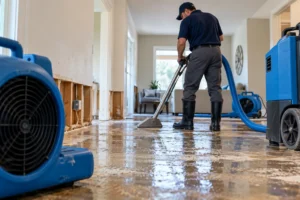 Water damage repair may include:
- Drywall
- Flooring
- Baseboards
- Insulation
- Cabinets
- Paint
- Structural materials
A smaller water loss may require only minor repairs. Severe water damage can require removing and replacing larger sections of the home’s interior.
Structural drying and reconstruction are separate parts of the restoration process. A home can be dry before all water damage repairs are finished.
What Equipment Is Used During Water Damage Restoration?
Professional water damage restoration uses different equipment for water extraction, structural drying, dehumidification, and moisture monitoring. The exact equipment depends on the amount of water, affected materials, and size of the damaged area.
A small plumbing leak may require only a few pieces of drying equipment. Widespread water damage may require multiple extractors, air movers, and dehumidifiers throughout the affected areas.
What Happens to Your Belongings During Water Damage Restoration?
Furniture and personal belongings may be moved, protected, cleaned, or temporarily removed from the affected area. What happens to each item depends on its condition, material, contamination, and whether it interferes with restoration work.
Some belongings only need to be moved to another part of the home. More extensive damage may require a pack-out, where contents are documented and moved to another location for cleaning or storage while restoration work takes place.
Moving contents can also give restoration professionals access to wet flooring, walls, and other building materials that need extraction or drying.
Do You Have to Leave Your Home During Water Damage Restoration?
You do not always have to leave your home during water damage restoration. Whether you can stay depends on contamination, safety hazards, the size of the affected area, demolition work, and whether essential areas of the home remain usable.
A small clean-water loss contained to one room may cause limited disruption. Sewage contamination, electrical hazards, structural damage, widespread demolition, or extensive drying equipment can make remaining in the home unsafe or impractical.
A restoration professional can assess the conditions inside the property and explain which areas should be avoided.
How Long Does Water Damage Restoration Take?
Water damage restoration can take from several days to several weeks or longer. Structural drying commonly takes about 3–5 days, while repairs can extend the complete restoration timeline.
Drying time depends on moisture levels, affected materials, humidity, airflow, and the extent of the damage. Reconstruction can add more time when drywall, flooring, cabinets, insulation, or other materials need replacement.
For a more detailed breakdown, read our guide on how long water damage restoration takes.
What Should You Expect While Your Home Is Drying?
Air movers and dehumidifiers may run for long periods while your home is drying. Restoration professionals monitor moisture levels during the drying process and adjust equipment as conditions change.
Homeowners should expect noticeable airflow and equipment noise. Dehumidifiers can also give off heat while operating, so conditions inside the affected area may feel different than normal.
Drying equipment is placed where restoration professionals expect it to work most effectively. Avoid turning off, unplugging, or moving air movers and dehumidifiers without first checking with the restoration company.
The equipment does not necessarily stay in place for a predetermined number of days. Moisture readings help determine when drying is complete.
When Is Water Damage Restoration Complete?
Water damage restoration is complete when affected materials have reached appropriate drying goals, necessary cleaning is finished, damaged materials have been repaired or replaced, and the affected area is ready for normal use.
Structural drying may finish before the entire restoration project. Once moisture levels are acceptable, repairs may still be needed to replace drywall, flooring, baseboards, cabinets, paint, or other materials removed during damage mitigation.
The final result should address both parts of the loss: the moisture that entered the property and the physical damage the water caused.
Water Damage Restoration in Charlotte, NC
 On Time Restoration provides professional water damage restoration in Charlotte, NC and surrounding areas. Our water damage restoration process can include assessment, water extraction, structural drying, moisture monitoring, cleanup, and repairs based on the needs of the property.
Fast water removal can help limit how far moisture spreads into drywall, flooring, insulation, cabinets, and structural materials. Addressing wet materials quickly can also reduce conditions that can lead to mold growth and additional damage.
If you discover water damage in your home, contact On Time Restoration for water damage restoration in Charlotte, NC.
Frequently Asked Questions
What Is the First Step in Water Damage Restoration?
The first step in water damage restoration is identifying the water source and assessing the extent of the damage. Restoration professionals determine where the water traveled, which materials are wet, whether contamination is present, and what needs to be extracted, dried, cleaned, or removed.
Does All Wet Drywall Need to Be Removed?
No. Wet drywall does not automatically need to be removed. Whether drywall can remain depends on the amount of moisture, physical damage, contamination, drying conditions, and whether the material can be dried to an appropriate moisture level.
Drywall that is badly damaged or contaminated may need to be removed and replaced.
How Do Restoration Companies Dry Out a House?
Restoration companies dry a house using water extraction, air movement, and dehumidification. Extractors remove liquid water. Air movers increase evaporation from wet materials. Dehumidifiers remove moisture from the indoor air.
Restoration professionals then use moisture measurements to track the drying process.
How Do Professionals Know When a House Is Dry?
Restoration professionals use moisture measurements rather than appearance alone to determine when affected materials are dry. Moisture meters can measure moisture in drywall, wood, flooring, and other building materials.
Relative humidity readings and moisture mapping can provide additional information about drying conditions and progress.
What Happens to Wet Flooring During Restoration?
Wet flooring may be extracted, dried in place, partially removed, or replaced depending on the flooring material, water source, physical damage, and moisture underneath it.
Carpet, hardwood, laminate, vinyl, tile, and subflooring react differently to water. Restoration professionals assess both the finished floor and materials underneath before deciding how to handle the damage.
Can You Stay Home During Water Damage Restoration?
Sometimes. Homeowners may be able to stay during a small, contained water restoration project when the property remains safe and essential areas are usable.
Contamination, electrical hazards, structural damage, demolition, or widespread water damage may make temporary relocation necessary.
How Long Do Air Movers and Dehumidifiers Run?
Air movers and dehumidifiers commonly run for several days during structural drying, but there is no fixed runtime for every water loss. Equipment runtime depends on moisture levels, humidity, affected materials, airflow, and the extent of the damage.
Moisture measurements help determine when drying equipment can be removed.
When Can Repairs Begin After Water Damage?
Water damage repairs can begin once the affected area is ready for reconstruction. Structural materials that will remain in place should reach appropriate drying goals before new finishes are installed over them.
Some demolition and cleanup may occur earlier in the water mitigation process. Final repairs usually follow water extraction, drying, and necessary cleaning.
What Is the Difference Between Water Mitigation and Water Restoration?
Water mitigation focuses on limiting additional damage after a water loss. Water extraction, removal of unsalvageable materials, structural drying, and moisture control are common damage mitigation steps.
Water restoration focuses on returning the damaged property to usable condition. Restoration can include cleaning, replacing drywall, installing flooring, repairing cabinets, painting, and other reconstruction work.