Mold on drywall often appears as black, green, brown, gray, or white spots or patches. It may look fuzzy, powdery, or like a flat stain. Mold can also grow behind drywall without being visible. Musty odors, water stains, bubbling paint, and damp walls are common warning signs of hidden mold.
Drywall is especially vulnerable because its paper facing provides a food source for mold when moisture is present. Identifying mold and finding the moisture source early can help prevent further damage to your walls.
Quick Takeaways
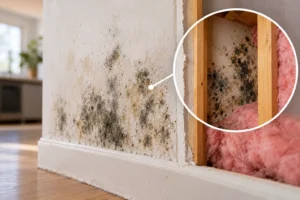 Mold on drywall can appear black, green, brown, gray, or white.
- Mold may look fuzzy, powdery, spotted, or patchy.
- Musty odors, bubbling paint, and water stains can indicate hidden moisture and possible mold growth.
- Mold can grow behind drywall without appearing on the visible surface.
- Moisture meters and professional inspections can help locate hidden moisture.
- Mold-damaged drywall may need to be removed and replaced.
- The moisture problem must be corrected to prevent mold from returning.
What Does Mold on Drywall Look Like?
Mold on drywall typically appears as discolored spots or irregular patches. Common colors include black, green, brown, gray, and white. Some mold looks fuzzy or powdery, while other growth appears flat against the wall.
Mold may appear as:
- Black spots: Small dark dots that may spread into larger patches.
- Green or gray patches: Irregular areas of discoloration on the drywall surface.
- White fuzzy growth: Light-colored mold that can be difficult to see on white walls.
- Brown or dark stains: Discoloration that may be mold or water damage.
- Clusters of spots: Small marks that may grow or spread in damp areas.
Not every dark spot or stain is mold. Dirt, soot, and water stains can look similar. Mold also cannot be identified by color alone.
The location of the discoloration can provide another clue. Spots appearing near a plumbing leak, window, ceiling stain, or other moisture source deserve closer attention.
How Can You Tell If Mold Is Growing Behind Drywall?
Mold behind drywall can be difficult to identify because the growth may be hidden inside the wall cavity. Common warning signs include a musty smell that lasts, past water damage, damp drywall, and paint or wallpaper that peels or bubbles.
These signs do not automatically mean mold is present. However, they can indicate excess moisture that may support hidden mold growth.
1. Persistent Musty Smell
A persistent musty or earthy smell may mean mold is growing behind drywall. This is more likely if the odor is strongest near one wall.
Hidden mold can produce odors even when no growth is visible. However, a musty smell alone does not confirm mold. Damp insulation, flooring, and other building materials can also produce unpleasant odors.
2. Water Stains or Discoloration
Yellow, brown, or dark stains on drywall often indicate past or ongoing water damage. Mold may develop behind the wall when moisture remains trapped in drywall, insulation, or wood framing.
Pay attention to stains that grow larger, return after painting, or appear near plumbing lines and windows.
A water stain does not always mean mold is present, but it can point to a moisture problem that needs attention.
3. Bubbling or Peeling Paint
Paint that bubbles, cracks, or peels may indicate moisture behind the drywall. Water can weaken the bond between paint and the wall surface, causing the finish to separate.
Poor ventilation and condensation can also contribute to moisture problems, particularly in bathrooms and kitchens.
Although peeling paint does not prove mold, repeated paint damage is a reason to check for hidden wall moisture.
4. Soft or Swollen Drywall
Drywall that feels soft, swollen, warped, or unusually weak may have absorbed water. Excess moisture can damage the gypsum core and paper facing.
Mold may develop on damp drywall when moisture remains long enough.
Soft or crumbling drywall can also indicate that the building material has deteriorated and may need replacement.
5. Previous Leaks or Flooding
Walls exposed to plumbing leaks, roof leaks, overflowing fixtures, or flooding may grow mold if not dried properly.
Water can travel behind drywall and collect around insulation, wood framing, and other porous surfaces.
Even when the painted wall looks normal, hidden water damage may remain inside the wall cavity.
Where Does Mold Commonly Grow on Drywall?
Mold commonly grows on drywall in areas with water leaks, excess moisture, condensation, or poor ventilation. Bathrooms, kitchens, basements, laundry rooms, ceilings, and exterior walls are frequent problem areas.
Common locations include:
 Bathrooms: Around showers, bathtubs, sinks, and poorly ventilated areas.
- Kitchens: Behind sinks, dishwashers, cabinets, and leaking plumbing connections.
- Basements: Along damp foundation walls and areas with high humidity.
- Laundry rooms: Near washing machine hoses, drains, and plumbing connections.
- Ceilings: Below roof leaks or plumbing leaks from an upper floor.
- Exterior walls: Around leaking windows, condensation, or water entering from outside.
Mold can also develop behind furniture, cabinets, and baseboards where moisture may go unnoticed.
The common factor is moisture. Mold needs moisture to grow, so identifying the water source is an important part of addressing the problem.
How Do Professionals Check for Mold Inside Walls?
Professionals check for possible mold inside walls by inspecting water damage, measuring moisture levels, and examining areas where water may have entered the wall cavity. Some situations require opening part of the drywall to confirm hidden mold growth.
Common inspection methods include:
Moisture meters help identify damp building materials, while thermal imaging cameras can reveal temperature patterns that deserve further investigation.
Neither tool can confirm mold by itself.
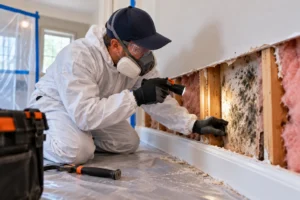
When hidden mold is suspected, a professional may recommend inspecting the wall cavity. This can involve carefully removing a section of drywall while taking precautions to limit the spread of mold spores and dust.
Mold sampling is not always necessary. When mold is visible, it is usually more important to find the moisture source and stop the growth.
Can Mold Grow Inside Drywall Without Being Visible?
Yes. Mold can grow on the back of drywall or on materials inside a wall cavity without appearing on the painted surface. Hidden mold often develops when water from a leaking pipe, roof leak, or exterior wall reaches the back of the drywall.
Drywall has a gypsum core covered by paper facing. The paper provides organic material that mold can grow on when moisture is present.
Hidden mold may also grow on wood framing, insulation facing, and other damp materials inside the wall.
The painted surface may look completely normal while moisture remains behind it. That is why a history of water damage, persistent odors, and moisture measurements can be useful when investigating suspected mold.
Does Moldy Drywall Need to Be Replaced?
Moldy drywall often needs to be removed and replaced when mold has grown into the porous material, the drywall is deteriorating, or the damage involves contaminated water.
Drywall is different from nonporous surfaces such as glass or metal. Mold can grow on the paper facing and may penetrate into porous materials, making complete cleaning difficult.
Small areas of surface mold may sometimes be cleaned under appropriate conditions. However, drywall that is heavily contaminated, soft, crumbling, or damaged by prolonged moisture exposure may not be worth saving.
Professional mold remediation may involve:
- Isolating the affected area with plastic sheeting or other containment methods.
- Removing mold-damaged drywall and insulation.
- Cleaning affected framing and nearby materials.
- Drying the wall cavity and correcting the moisture source.
- Replacing damaged drywall after the area is ready for repairs.
The extent of mold growth matters. The EPA usually suggests hiring a professional for mold areas larger than about 10 square feet. It also applies to cases with contaminated water or major hidden damage.
Painting over mold or simply wiping the visible surface does not correct the moisture problem. Mold can return if the underlying water source remains.
Can You Test for Mold Behind Drywall Yourself?
Homeowners can look for warning signs of mold behind drywall, but confirming hidden mold may require a professional inspection. Musty odors, water stains, soft drywall, and a history of leaks can help identify areas that deserve closer attention.
A homeowner may use a moisture meter to check for elevated moisture levels. However, moisture readings do not confirm mold growth.
Home mold test kits also have limitations. Mold spores are common in indoor and outdoor air. So, a positive result may not show hidden mold. It also may not explain how much mold exists.
Avoid cutting into drywall or disturbing suspected mold without understanding the size of the affected area. Opening a contaminated wall can release mold spores and dust into the surrounding space.
If you suspect extensive hidden mold, professional mold remediation or an independent mold assessment may be appropriate.
Mold Remediation in Charlotte, NC
 On Time Restoration provides professional mold remediation services in Charlotte, NC and surrounding areas.
If you’ve noticed mold spots, musty odors, water stains, or signs of hidden moisture, addressing the problem early can help limit further damage to drywall and other building materials.
Professional mold remediation can involve containment, removal of damaged materials, cleaning, drying, and addressing the moisture conditions that allowed mold to grow.
Contact On Time Restoration for help with mold on drywall or suspected mold inside your walls.
Frequently Asked Questions
What Are the First Signs of Mold on Drywall?
The first signs of mold on drywall may include small black, green, gray, or brown spots, unusual discoloration, or fuzzy growth. Musty odors and recurring dampness can also indicate a moisture problem that may support mold growth.
How Do You Know If Mold Is Behind a Wall?
Possible signs of mold behind a wall include musty odors, water stains, peeling paint, soft drywall, and a history of leaks. These signs do not confirm mold, but they can indicate hidden moisture that deserves further inspection.
Can Mold Grow Behind Painted Drywall?
Yes. Mold can grow on the back of painted drywall when moisture enters the wall cavity. The painted surface may appear normal even when mold is growing on the drywall’s paper backing or nearby building materials.
What Is the Difference Between Mold and Water Stains on Drywall?
Mold often appears as irregular spots or patches that may have a fuzzy or powdery texture. Water stains are usually flat areas of discoloration caused by moisture. However, mold can also appear flat, so appearance alone cannot always distinguish mold from staining.
Is Black Mold on Drywall Always Dangerous?
Black-colored mold is not necessarily the species commonly called toxic black mold. Mold color alone cannot identify the species or determine its health risks. Indoor mold exposure can cause health problems for some people, so visible mold and the underlying moisture source should be addressed.
Can You Paint Over Mold on Drywall?
No. Painting over mold does not remove the growth or correct the moisture source. Mold should be properly cleaned or removed, and damaged drywall may need replacement before repainting. Painting directly over mold can allow the problem to continue beneath the new finish.
How Quickly Can Mold Grow on Wet Drywall?
Mold can begin growing on wet drywall within 24–48 hours under favorable conditions, although visible growth may take longer. Temperature, humidity, moisture levels, and the condition of the material all affect mold growth. Drying wet drywall promptly helps reduce the risk of mold developing.