Moldy drywall often needs to be replaced because drywall is porous and mold can grow on its paper facing. Small areas of surface mold can sometimes be cleaned. Drywall with heavy mold, water damage, or hidden contamination usually needs removal. The moisture source must also be fixed to prevent mold from returning.
The drywall’s condition and the amount of mold growth determine if cleaning or replacement is best. Here’s how to tell when moldy drywall can be saved and when it should be removed.
 Quick Takeaways
- Moldy drywall often needs replacement, especially when the material is damaged.
- Small areas of surface mold can sometimes be cleaned.
- Mold growing behind drywall may require removal.
- Soft, swollen, or crumbling drywall should usually be replaced.
- Painting over mold does not remove it.
- Water leaks and other moisture problems must be fixed before repairs.
Does Moldy Drywall Always Need to Be Replaced?
No. Moldy drywall does not always need to be replaced. Small amounts of mold on an intact painted surface can sometimes be cleaned. However, drywall with heavy mold growth, hidden contamination, or water damage usually needs replacement.
The main difference is where the mold is growing.
Painted drywall has a smooth surface that may be easier to clean. However, the paper underneath is porous. When water reaches the paper or gypsum core, mold becomes harder to remove.
Drywall that is still firm, dry, and undamaged may be worth saving. Drywall that is soft, falling apart, or covered in mold often needs replacement.
When Should Moldy Drywall Be Replaced?
Moldy drywall should usually be replaced when mold grows behind the wall, the drywall is damaged, or cleaning cannot remove the mold. Large areas of mold, sewage damage, and mold that keeps returning may also require replacement.
1. Mold Is Growing Behind the Drywall
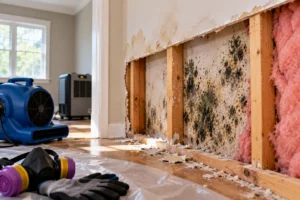
Drywall with mold growing on the back often needs to be removed. Cleaning the painted surface will not remove mold hidden inside the wall.
Hidden mold can develop after plumbing leaks, roof leaks, or water entering through exterior walls. Water can collect behind drywall and reach insulation, wood framing, and other materials.
Common warning signs include musty smells, water stains, bubbling paint, and soft drywall.
2. Drywall Is Soft, Swollen, or Crumbling
Soft, swollen, or crumbling drywall should usually be replaced. These are signs that water has damaged the material.
Drywall has a gypsum core covered by paper. Too much moisture can weaken the gypsum and damage the paper surface.
Even after mold is removed, badly damaged drywall may no longer be strong enough to keep.
3. Mold Has Spread Across a Large Area
Large areas of mold on drywall are harder to clean safely. Mold may also be growing behind the surface where it cannot be seen.
The Environmental Protection Agency (EPA) says homeowners can generally clean mold covering less than about 10 square feet themselves. Larger areas call for more detailed cleanup guidance and may need professional help.
This does not mean every area larger than 10 square feet needs new drywall. The amount of mold and the condition of the material determine if replacement is needed.
4. Drywall Was Exposed to Sewage or Contaminated Water
Drywall exposed to sewage or heavily contaminated water usually needs to be removed and replaced.
Sewage can carry bacteria and other harmful contaminants. Drywall absorbs water, making it difficult to clean once contaminated.
The EPA recommends hiring a professional experienced in cleaning buildings damaged by sewage or other contaminated water.
5. Mold Keeps Returning After Cleaning
Mold that keeps returning usually means the moisture problem has not been fixed. Cleaning the surface will not stop mold from growing if the drywall stays damp.
Common causes include leaking pipes, condensation, poor ventilation, and water trapped behind walls.
Before replacing the drywall, find and fix the moisture source. The wall should also be checked for hidden mold and water damage.
If mold has reached the paper backing or damaged the drywall, replacement may be necessary.
Can Moldy Drywall Be Cleaned Instead of Replaced?
Moldy drywall can sometimes be cleaned if the mold is limited to a small area on an intact painted surface. The drywall should also be dry, firm, and free of major damage. Mold growing into porous materials or behind the wall usually needs removal.
The table below shows when cleaning may work and when replacement is more likely.
These are general guidelines. The best option depends on how much mold is present and how badly the drywall is damaged.
Why Is Mold Difficult to Remove From Drywall?
 Mold is difficult to remove from drywall because drywall is porous. Water can soak into the material, allowing mold to grow on the paper surface and in damaged areas that are hard to clean.
Drywall has a gypsum core covered by paper on both sides. When the paper gets wet, it provides a surface where mold can grow.
Glass, metal, and other nonporous surfaces are usually easier to clean. Mold cannot grow into these materials the same way it can affect porous drywall.
Scrubbing the front of the wall may remove visible mold. However, it will not remove mold growing on the back of the drywall or inside damaged sections.
This is why some mold problems require removing drywall instead of cleaning it.
What Happens When Moldy Drywall Is Replaced?
Replacing moldy drywall involves removing damaged materials, cleaning the affected area, and fixing the moisture problem. New drywall should not be installed until the wall is properly cleaned and dried.
Professional mold remediation usually follows these steps:
- Inspect the damage. Check for visible mold, hidden moisture, and water leaks.
- Contain the area. Use plastic sheeting and other methods when needed to keep mold spores and dust from spreading.
- Remove damaged materials. Take out moldy drywall, insulation, and other materials that cannot be cleaned.
- Clean and dry the wall. Clean affected wood framing and nearby surfaces. Dry the wall cavity.
- Check moisture levels. Confirm that the moisture problem is fixed and the area is ready for repairs.
- Install new drywall. Replace the removed drywall, then finish and paint the wall.
Not every mold problem requires removing an entire wall. The amount of drywall removed depends on how far the mold and water damage have spread.
Can You Replace Moldy Drywall Yourself?
Homeowners may be able to remove small areas of moldy drywall with the right safety precautions. However, large mold problems, hidden mold, sewage damage, and major water damage are better handled by professionals.
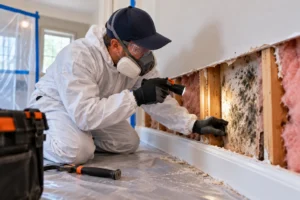
Cutting into moldy drywall can release mold spores and dust into the air. Removing the wall may also expose more mold on insulation, wood framing, or the back of the drywall.
Before starting, homeowners should know how much of the wall is affected and what protective equipment is needed.
The EPA’s mold cleanup guidance recommends reviewing more detailed cleanup instructions for areas larger than about 10 square feet. Professional help is also recommended for sewage-related damage.
If you suspect mold behind drywall or cannot find the moisture source, have the wall inspected first.
Don’t Let Mold Spread Behind Your Walls
 Moldy drywall may be a sign of a bigger moisture problem. Cleaning visible mold will not solve the issue if water damage or hidden mold remains behind the wall.
On Time Restoration provides professional mold remediation services in Charlotte, NC and surrounding areas.
Our team helps homeowners address mold-damaged drywall, hidden moisture, and affected building materials. Proper mold remediation can help prevent mold from returning after repairs.
Frequently Asked Questions
Can You Paint Over Moldy Drywall?
No. Painting over moldy drywall does not remove mold or fix the moisture problem. Mold should be cleaned or removed before painting. Drywall with heavy mold or water damage may need replacement.
Can Mold Grow Back on New Drywall?
Yes. Mold can grow on new drywall if moisture remains or returns. Plumbing leaks, roof leaks, condensation, and poor ventilation can all lead to mold growth. The moisture source must be fixed before new drywall is installed.
Does Mold Behind Drywall Mean the Whole Wall Must Be Replaced?
No. Mold behind drywall does not always mean the entire wall needs replacement. Small areas may only require removing affected sections. Larger mold problems or heavy water damage may require removing more of the wall.
How Long Does It Take to Replace Moldy Drywall?
Replacing a small section of moldy drywall may take a few days. Larger mold problems can take longer because the area must be cleaned and dried before repairs begin. Installing, finishing, and painting new drywall also takes time.
Does Homeowners Insurance Cover Moldy Drywall Replacement?
Homeowners insurance may cover moldy drywall replacement if the mold resulted from a covered event, such as certain sudden plumbing leaks. Coverage depends on the policy and what caused the water damage. Mold from slow leaks, poor maintenance, or long-term moisture problems is often excluded or has limited coverage.