

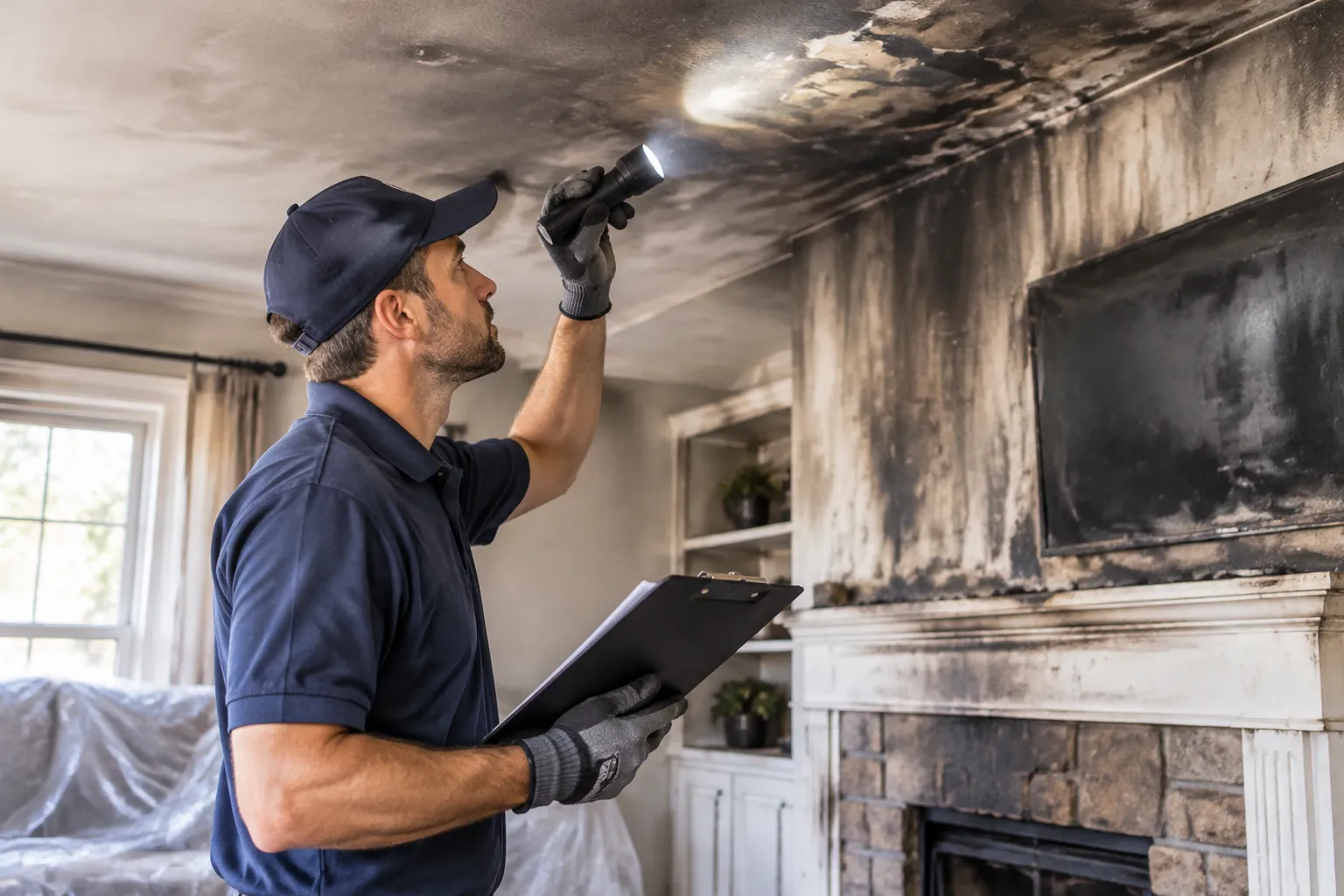
 Fire Damage Restoration In Concord
Your Concord home just had a fire. The house smells like smoke, water is everywhere, and you’re not sure what’s safe to touch. Fire damage restoration in Concord, NC is how you get your home back.
It covers boarding up and tarping the house, drying out the water damage, cleaning soot and smoke, and getting rid of the smell. It also covers saving your things, making repairs, and help with your insurance claim. The sooner it starts, the easier it is, so below you’ll learn how to keep your family safe, what not to clean yourself, and what a good crew should do, in order.
Fire Damage Insights
- Stay out of your home until the fire department says it is safe to go back in.
- Ash, soot, and dirty water can make you sick, so keep kids and pets away and don’t stir up the mess.
- Take photos and videos of the damage before anything gets moved, but only if you can do it safely. Your insurance company will want them.
- Don’t turn on your heat or AC, and don’t wipe soot yourself. Both can spread the damage.
- A good crew checks and secures the home first. Then it dries, cleans, removes odors, restores belongings, and makes repairs.
- Before you hire anyone, ask if they answer day and night and how they work with your insurance company.
What Fire Damage Restoration in Concord, NC Includes
A house fire is really three problems at once. Smoke, soot, and the water used to put out the fire each cause their own damage.
That’s why restoration includes several kinds of work. Here’s what it covers:
- Board-up and roof tarping: Covering broken windows, doors, and holes in the roof. This keeps out rain, animals, and strangers.
- Water removal and drying: Pumping out standing water and running fans and dehumidifiers until moisture readings show walls and floors are dry.
- Soot and smoke cleaning: Removing the black film from the walls, ceilings, cabinets, and ducts that were affected.
- Odor removal: Treating the source of the smoke smell instead of just covering it up.
- Contents restoration: Cleaning and saving furniture, clothes, photos, and other things that matter to you, when they can be saved.
- Repairs: Replacing drywall, flooring, and other damaged parts of the house.
- Insurance help: Photos, notes, and paperwork to support your claim.
Timing matters. The sooner fire damage is taken care of, the easier and faster it is to get your home back to how it was before the fire.
Fire Damage Risks Concord Homeowners Face: Smoke, Soot, and Water
Even a small kitchen fire can leave a big mess. Smoke and soot from a small fire can badly damage the walls, ceilings, and belongings in a home.
Smoke and Soot Spread Farther Than You Think
The residue settles into fabrics, furniture, and air ducts. Without a deep cleaning, smoke smells can last for months.
It’s also a health issue, not just a mess. Smoke and soot can be harmful to your family, your friends, and your pets.
Water From Firefighting Causes Its Own Damage
Firefighters use a lot of water to put out a fire. That water soaks into your walls, floors, and insulation.
Water damage can lead to mold and problems with your home’s structure. It often hides inside walls and under floors, so many homeowners find it weeks later.
How Common House Fires Are
About 329,500 home structure fires happened across the U.S. in 2024. That’s about one every 96 seconds.
They also hurt people. In 2024, home structure fires caused about 2,920 deaths and an estimated 8,920 injuries.
Concord sees its share too. Based on national fire reporting data, Concord has reported 1,754 structure fires, which is 40.5% of all its fire incidents. The source doesn’t say which years that covers, so don’t read it as a yearly count.
What Should You Do in the First 24 Hours After a House Fire?
The first day after a fire is hard. Take it one step at a time. These steps keep your family safe and protect your insurance claim.
- Wait for the fire department to clear entry. A fire can flare up again, and floors or ceilings may be weak. Being cleared to enter doesn’t mean the home is safe to live in or that your things are safe to handle.
- Get your family and pets somewhere safe. Stay with friends, family, or at a hotel for now. Keep kids and pets away from the house.
- Protect yourself from ash and soot. Don’t sweep, shake, or stir up ash. If you have to be near it, wear gloves, long sleeves, long pants, and a well-fitted N95 mask. That gear lowers your exposure, but it doesn’t make cleanup safe to do yourself. The EPA has a guide called “Protect Yourself from Ash” with “guidelines for reducing exposure to ash after a fire, including during cleanup.”
- Take photos and videos, if you can do it safely. Get the outside of the house and any rooms you’re allowed into before anything is moved or thrown out. Don’t go inside just to take pictures.
- Call your insurance company. Tell them what happened and ask what your policy covers, including emergency repairs and a place to stay.
- Don’t turn on your heat or AC. The system can blow soot through the ducts and into rooms that were clean.
- Call a restoration company quickly. Every hour that water sits makes drying harder and gives mold more time to start.
What Not to Clean Yourself
It’s normal to want to start scrubbing right away. But the soot and dirty water a fire leaves behind may carry things that can make you sick.
Leave these jobs to a trained crew:
- Soot on walls and ceilings: Wiping it can smear it and push it deeper into the surface, which makes it harder to remove.
- Wet drywall, carpet, and insulation: These hold dirty water and need to be checked for mold.
- Electronics and appliances: Don’t plug in or turn on anything that got wet or covered in soot.
- Air ducts: Soot inside the ducts needs special tools to clean out.
- Couches and fabric furniture: Smoke soaks deep into the cushions, and home cleaners can set the smell in for good.
Here’s what you can safely do. Start a list of damaged items, and if the fire department lets you in, grab key things like ID and medicine. Don’t use medicine that was exposed to heat, smoke, or soot until a doctor or pharmacist says it’s OK.
How Does 24/7 Emergency Fire Damage Response Work in Concord, NC?
A fire doesn’t wait for business hours. When you call a restoration company, ask right away if they answer day and night. Here’s what the first visit should look like.
- The first call. A good company should ask what happened, whether everyone is safe, and whether the fire department has cleared the home.
- A safety check. The crew should look for hazards and walk through the home with you, explaining what they see in plain words.
- Notes and photos. They should photograph and write down the damage in each affected area. This guides the work and helps your claim.
- Stopping more damage. They should board up open windows and doors and tarp any holes in the roof.
- Starting on the water. They should begin removing standing water and set up drying equipment.
Also ask how they’ll keep you updated. Why the rush? The faster the work starts, the easier and quicker it is to get your home back to normal.
Best Ways to Protect Your Concord Home From Fire Damage
Cooking is one of the leading causes of house fires. There were 188,800 cooking fires in U.S. homes and apartment buildings from 2014 to 2016. A few simple habits really count.
- Stay in the kitchen when you’re frying, grilling, or boiling food. Keep towels, paper, and oven mitts away from the stove.
- Never put water on a grease fire. Only if it’s safe, slide a metal lid over the pan and turn off the burner. Don’t move the pan, and if the fire grows, get everyone out and call 911.
- Check your smoke detector batteries twice a year. Replace the whole detector every 10 years.
- Look over your electrical cords often for wear or damage. Don’t buy electrical items from flea markets or unknown sellers.
- Don’t plug too many things into one outlet. Use extension cords only for a short time, and talk to an electrician about upgrades.
- Make a family fire escape plan so everyone can get out in about two minutes. Practice it together.
- Check your fire extinguishers once a year and follow the maker’s guidance on when to replace them. Make sure you have the right type for each room.
- Keep an emergency kit with water, food, first aid items, and copies of important papers.
How On-Time Restoration Restores Fire-Damaged Homes in Concord
You deserve to know what a good crew should do and in what order. Smoke, soot, and water each cause different damage, so each one needs its own step. The exact order can change based on safety, the materials in your home, and how bad the damage is.
- Inspect and document. The crew checks for structural problems, soot, water, and early signs of mold, then explains the plan before work begins.
- Secure the home. Windows, doors, and roof holes get covered so weather and strangers stay out.
- Remove water and damaged materials. Standing water comes out first. Soaked drywall, carpet, or insulation may need to come out too, so the spaces behind them can dry.
- Dry and check. Fans and dehumidifiers run while the crew takes moisture readings. Drying should continue until the readings show it’s done, not just until things feel dry.
- Clean soot and smoke. Smoke and soot from even a small fire can damage walls, ceilings, and belongings. The crew cleans the affected areas, which can include closets, cabinets, and ducts.
- Treat odors at the source. Covering up the smell isn’t enough. The goal is to remove what’s causing it.
- Repair and rebuild. Drywall, flooring, and other damaged parts get replaced.
- Final check. You walk the home with the crew and raise anything that still looks or smells wrong.
Your belongings don’t have to wait until the end. Sorting, listing, and cleaning them can happen alongside the building work. Be ready for the hard part, too: some materials and belongings can’t be saved.
Safety comes first the whole way through. Smoke and soot can be harmful to people and pets, and water damage can lead to mold and structural problems. Keep your family out of work areas until they’re clean.
Why Choose On-Time Restoration for Fire Damage in Concord, NC?
After a fire, you need a crew that shows up, explains things clearly, and doesn’t skip steps. Use the checklist above when you talk to any company, including us.
Ask how hidden damage will be found, like moisture inside walls and soot in the ducts. Finding it early helps stop mold and lingering odors.
You won’t find prices in this article. Every fire is different, so the cost depends on what an inspection of your home finds.
How Insurance Help Works
Insurance can feel like the most confusing part. Your insurance company decides what’s covered and what gets paid, and no restoration company can promise your claim will be approved. Here’s how it usually goes:
- You report the fire to your insurance company and get a claim number.
- You ask about emergency repairs, a place to stay, and what they need from you.
- You document the damage when it’s safe, and the restoration crew adds its own photos, notes, and moisture readings.
- You review the proposed work and approve it before it starts.
- The crew shares its records with your adjuster and answers their questions.
Keep every receipt and your list of damaged items. Ask your insurance company before you throw anything away, unless it has to go right away for safety.
If you need fire damage restoration in Concord, NC, you don’t have to figure it out alone. Contact On-Time Restoration to talk through your next steps.
Fire Damage F.A.Q.’s
1. How fast should I call for fire damage restoration in Concord?
Call as soon as possible, ideally within 24 to 48 hours of the fire. Soot can permanently stain walls and surfaces within 72 hours, so acting fast saves more of your home and lowers repair costs.
2. What does the fire damage restoration process include?
Most crews start with a full inspection, then secure your home by boarding up windows and tarping the roof. Next, they remove water, clean off soot, and eliminate smoke odor using industrial air scrubbers and chemical sponges. The final step is repairing or rebuilding any damaged walls, floors, and ceilings.
3. Will my homeowners insurance pay for fire damage restoration?
Most standard homeowners insurance policies cover sudden, accidental fires, though your exact coverage depends on your plan. A good local restoration company will document the damage with photos and work directly with your insurance adjuster to help make the claims process easier.
4. Can I clean up smoke and soot by myself?
It’s not a good idea, since soot contains acidic compounds and toxic particles that require professional-grade equipment like HEPA vacuums and chemical sponges to remove safely. Improper cleanup can spread contamination further and may actually hurt your insurance claim.